Alberte Goldschmid Hit-and-Run
The Hanging GirlAlberte Goldschmid’s hit-and-run became a defining unsolved case for Christian Habersaat: a violent collision that left almost no usable trace, and an investigation whose apparent conclusion could not explain how she had been thrown into a tree. On November 20, 1997, she was struck on Bornholm; more than a day passed before she was found, suspended high in a roadside tree. The accident was treated as a serious traffic collision, but the evidence never identified the vehicle or driver. Later work by Department Q complicated the original reconstruction rather than resolving the case outright: it suggested that the impact may have involved more than a vehicle’s fender, while also ruling out one board as the object that launched her.
The Collision and Delayed Discovery
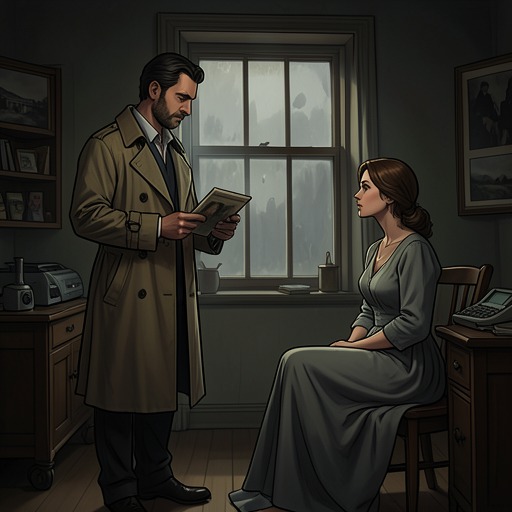
November 20 was an ordinary day at Bornholm Folk High School. John Birkedal described a community of about fifty students, aged eighteen and older, studying subjects including music, glasswork, painting, and pottery during the winter half year. The students were mostly happy and got along; they had no sense of danger and did not yet know that Alberte, regarded as gentle, pretty, and probably the school’s most popular student, had been killed that morning.
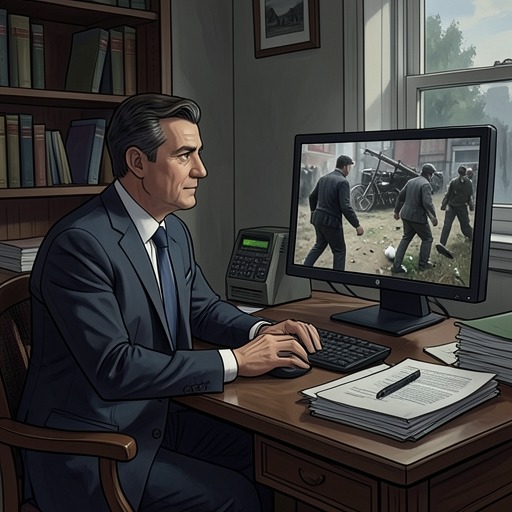
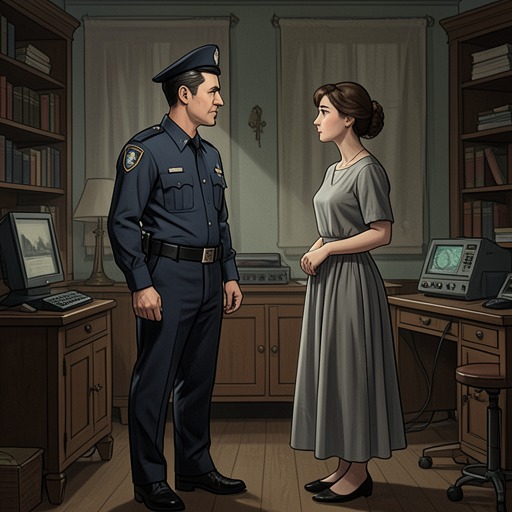
The collision left Alberte’s body so far up in a roadside tree that it was nearly impossible to see. A little more than a day after she was killed, a uniformed police officer from Nexø, Christian Habersaat, happened to look up as his car passed the tree and discovered her. The sight of her limp body, and the inscrutable expression fixed on her face, remained with him. The discovery was not simply the recovery of a victim: it became the image around which Habersaat’s lasting preoccupation with the case gathered.
The postmortem and scene evidence supported a traffic-related death, but did not produce a clear account of the impact. Alberte had fractures and internal and external bleeding. Investigators thought she had probably remained alive for some time after being thrown into the tree. Her bicycle was found some distance away in the thicket, badly mangled almost beyond recognition. Its position established that she had been cycling there, but the distance between the bicycle and the roadside tree also became an important part of later attempts to reconstruct what had happened.
A Search Without a Lead
The initial classification rested on very slight leads. Investigators searched for skid marks but found none, and hoped that paint flakes might have adhered to Alberte’s clothes; the vehicle had apparently passed without leaving such a trace. Residents along the road were questioned. One person had heard a car travelling at terrible speed and disappearing toward the main road, but no account pointed to a particular driver or vehicle. The road was described as reasonably dry, making the absence of visible marks a question that Carl Mørck later pressed during the review.
The police response widened beyond the immediate scene. They sought vehicles with unexplained damage to the front, monitored cars leaving by ferry for Sweden and Copenhagen throughout the week, and called in all twenty thousand vehicles on the island for inspection at motor-vehicle diagnostic stations in Rønne and Nexø. The checks caused obvious disruption, yet local people were unusually understanding and helped scrutinize passing cars. Even this extensive search produced no lead. Its scale and failure hardened the case’s defining contradiction: an impact forceful enough to throw a person into a tree, but no identifiable vehicle, driver, skid marks, or paint trace.
Habersaat’s Reconstruction
When Department Q revisited the case, Habersaat’s working material preserved details that could be compared with the official scene account. One note, in his handwriting, described a small splinter found in a straight line between the recovered bicycle and the place where Alberte was understood to have been hit. Habersaat’s papers also included a plan of the tree, the road, and the bicycle in the thicket. Carl Mørck recognized that it resembled the scene as he had imagined it; Assad had made a separate drawing showing a vertical section of the accident site and its surroundings. These diagrams made the spatial relationship among road, tree, and bicycle a problem that could be tested rather than merely pictured.
The splinter was identified as birch. Habersaat’s notes connected it to a board recovered from the water, describing the possibility that the splinter had peeled from an outer plywood layer over time. The proposed board was estimated to have been between twenty and twenty-four millimetres thick, with its middle eighteen millimetres still intact. But the evidence did not establish that the splinter and the recovered board came from the same object. Habersaat’s theory remained a theory, not a confirmed identification.
Technical Findings and the Unresolved Impact
A later technical review confirmed that the splinter was plywood but rejected the recovered board as the one that had thrown Alberte into the tree. The boreholes Habersaat had described did not provide a workable way to attach that board to a vehicle such as a Kombi. Attaching it through the window-wiper channel would, according to the technicians, likely have sent both the board and the windshield flying; investigators had found no traces of either at the scene, even allowing for the possibility of a thorough cleanup. The technicians also concluded that a fender alone would not have supplied enough force to launch Alberte into the tree. Their assessment was that a properly fitted shovel blade would have been needed.
That conclusion sharpened the physical question without naming a culprit or proving how the vehicle had been altered. The board found in the water could not be treated as the instrument of the collision, and the splinter could not securely link it to the scene. Yet the estimated trajectory, the mangled bicycle, the body’s position, and the technical objection to a fender-only impact all made the original label of traffic accident feel incomplete. The hit-and-run remained both a death with a plausible broad explanation and a case whose decisive mechanism had escaped confirmation.